Minami Kobayashi
Half Waking
14 February – 11 April 2026, Kurfürstenstraße 24/25
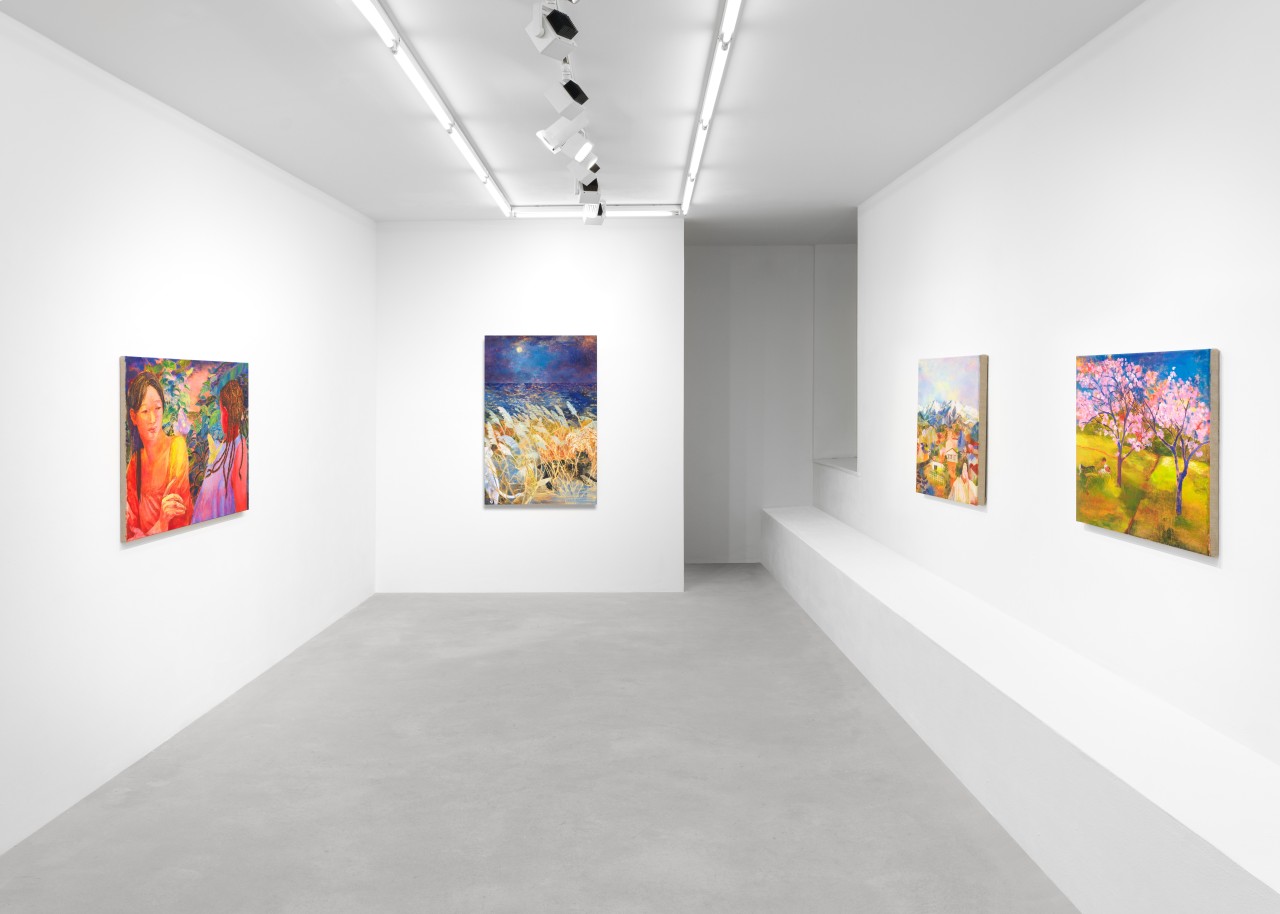
Tanya Leighton is pleased to present ‘Half Waking’, a solo exhibition by London-based artist Minami Kobayashi.
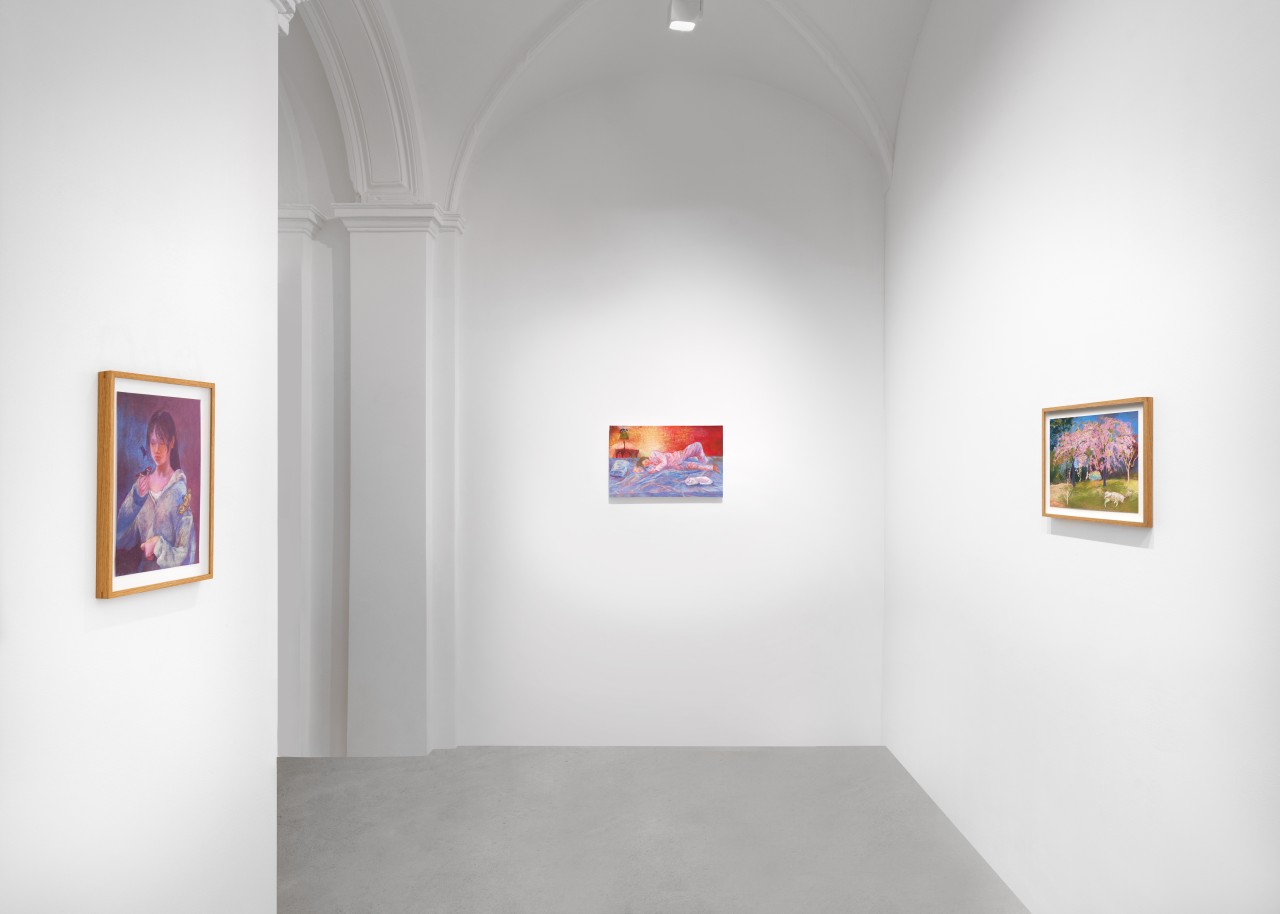
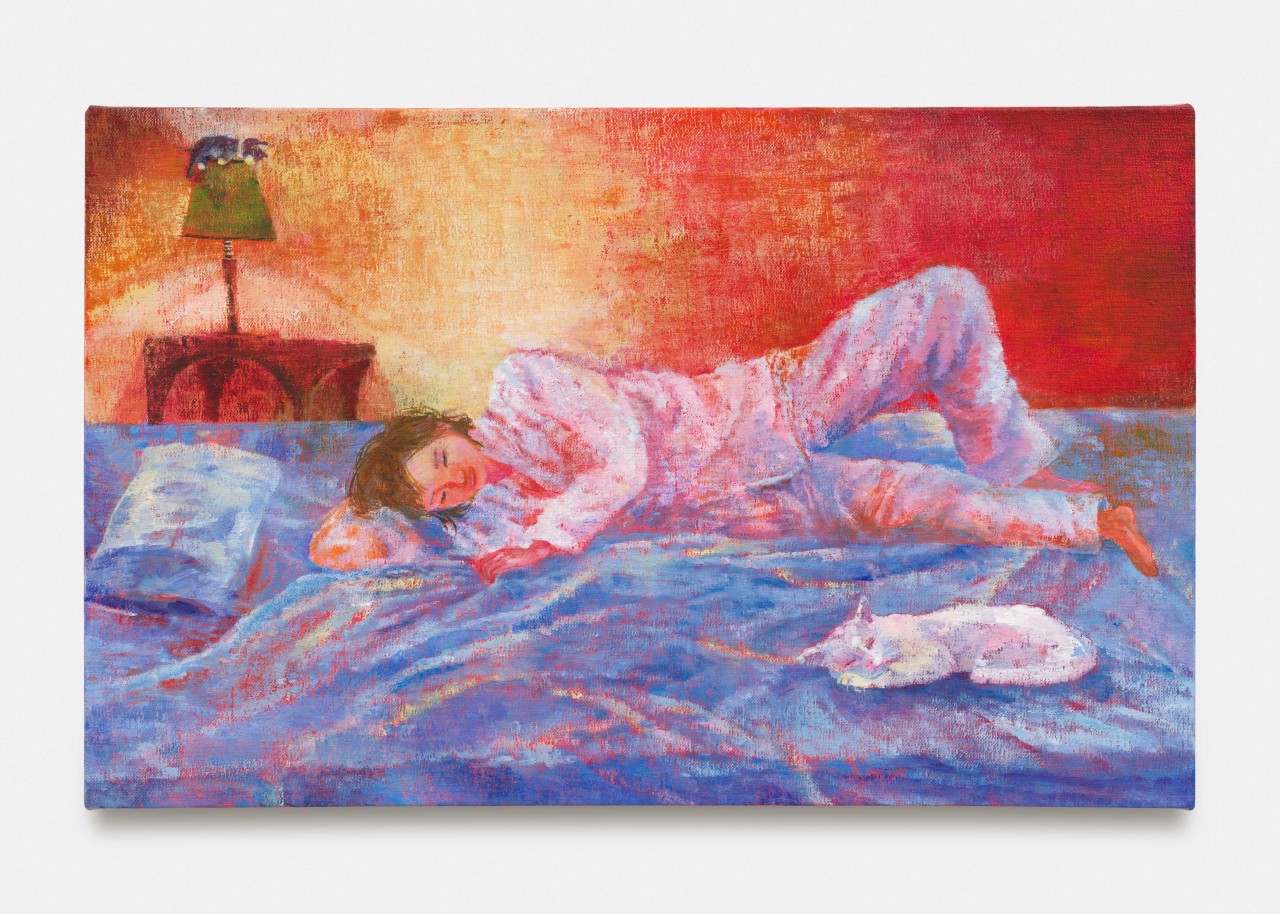
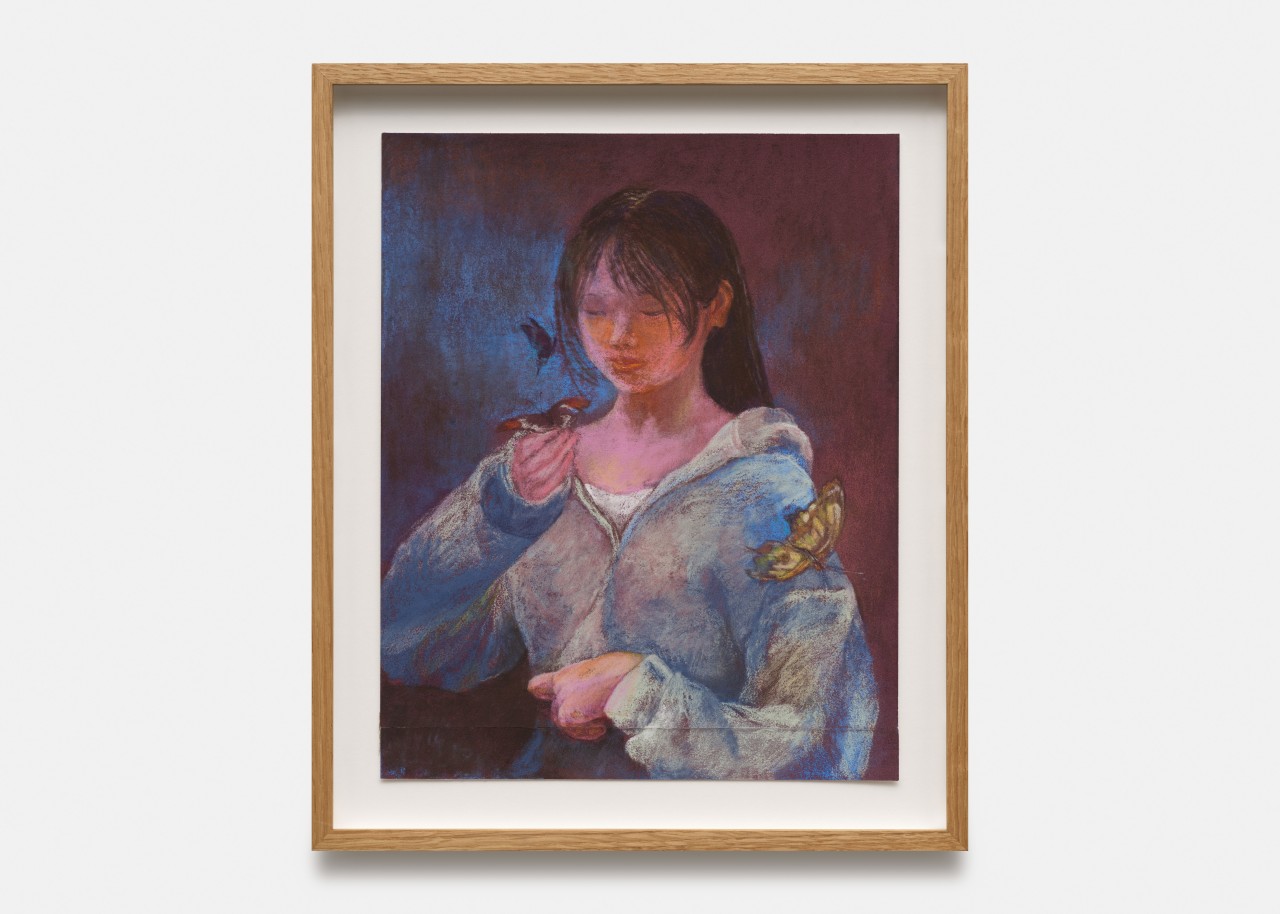
Kobayashi’s emotionally charged yet quietly rendered images sit somewhere between waking and dreaming. She draws on her childhood memories as well as her interest in religious iconography, Noh theatre, and landscape traditions while avoiding any fixed boundaries between these sources. Her works often depict transient moments where symbolic figures emerge from and recede into their surroundings: a masked celestial maiden at the edge of a clearing, a butterfly perched on a teenage girl's shoulder, or a ladybird hovering over a tarot reading. These scenes are not allegorical; rather, they are imbued with lived experience and emotional intuition, anchored in particular places and seasons yet open to imaginative reworking.
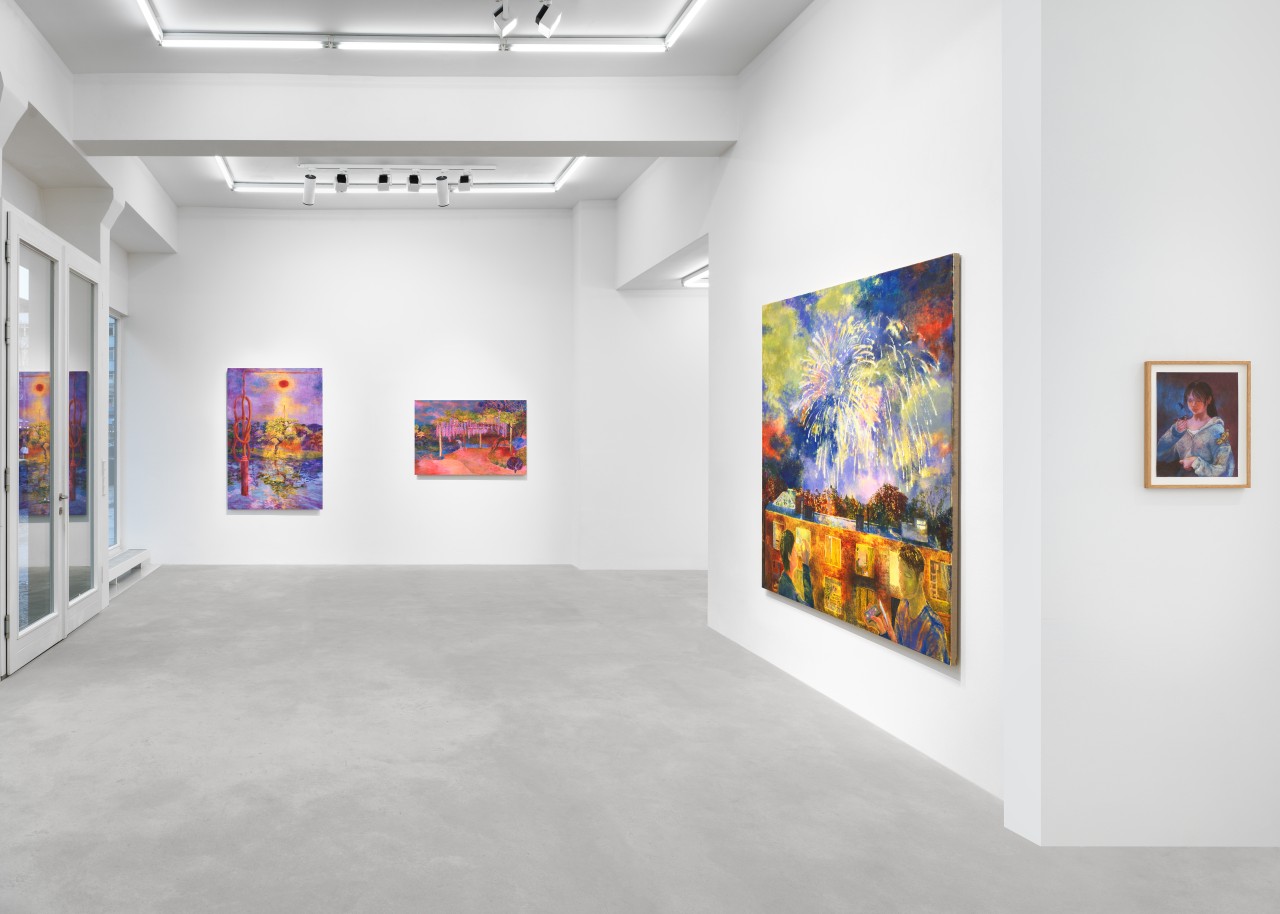
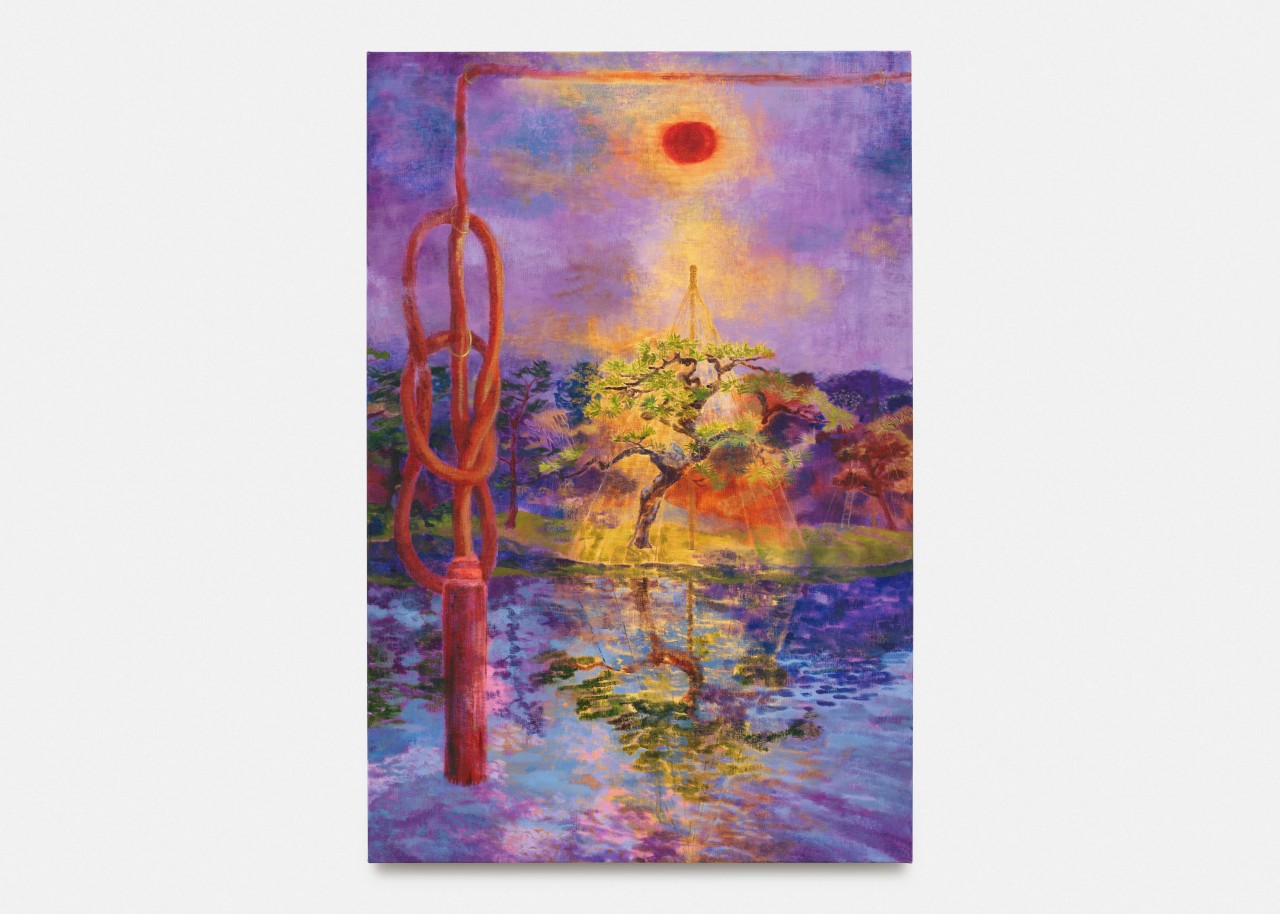
The exhibition unfolds with the measured temporality of Noh theatre, where a single gesture can extend across minutes and symbolic resonance takes precedence over literal narrative. Kobayashi draws on this theatrical tradition not as subject matter but as compositional logic, creating paintings that operate through mood, attunement, and a nocturnal palette. The pine tree makes this theatrical framework explicit. It references the iconic stage setting of Noh theatre, where a stylised pine tree anchors the backdrop. The tree depicted in her painting is based on one from a park in Shizuoka, her hometown, where it is wrapped in yukizuri ropes to protect its limbs from heavy snowfall, a traditional practice maintained by local gardeners. Such gestures of care, rooted in specific horticultural traditions, function in the painting as quiet reminders of the interaction between natural cycles and human attention. An Oriental turtle dove rests in the branches, its presence marking the passage of a still morning.
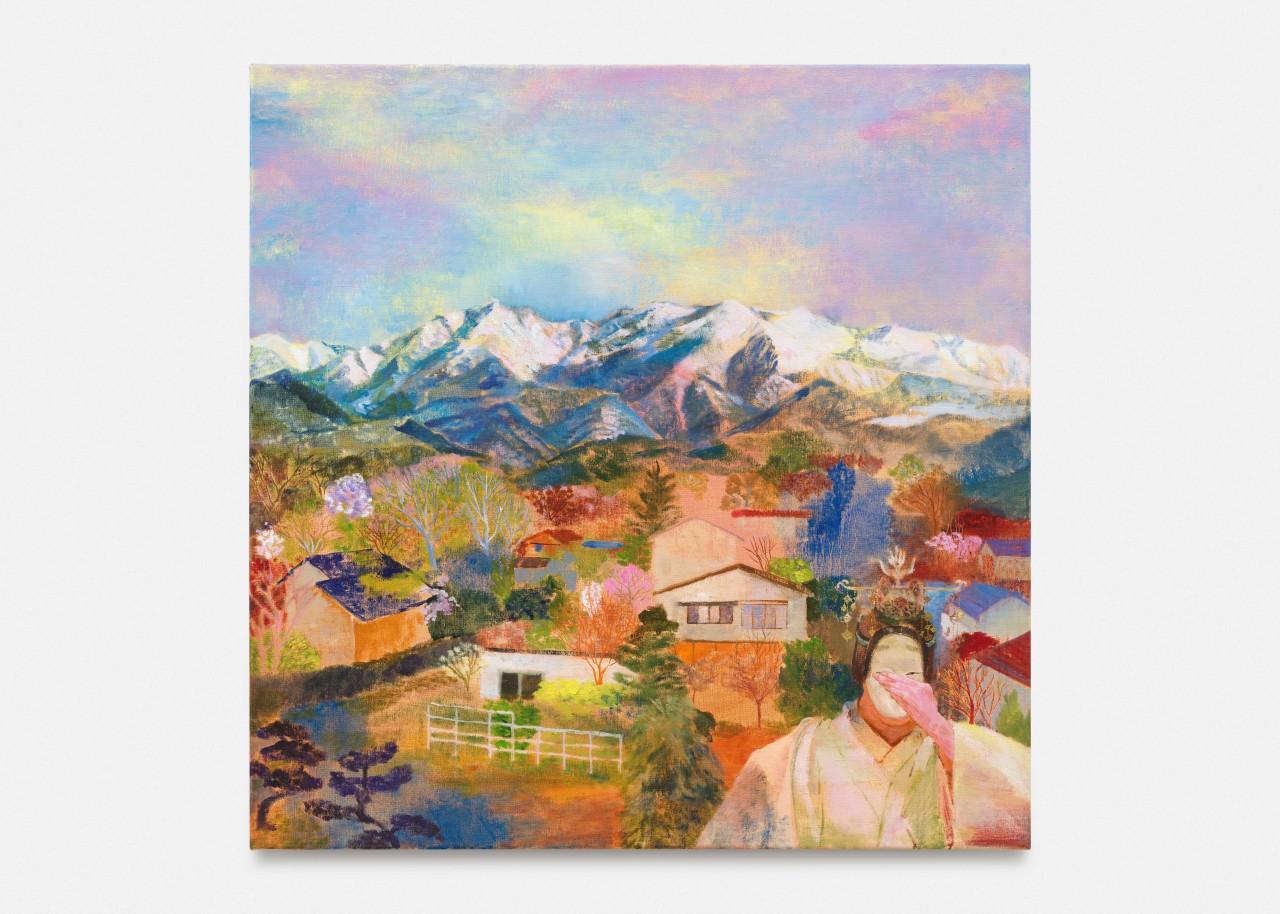
This convergence of theatrical space and remembered landscape recurs in The robe of a celestial maiden, which draws directly from the Noh play Hagoromo. In the play, a celestial maiden loses the feather robe she needs to return to heaven. Kobayashi transposes this figure into a contemporary landscape, where houses nestle among blossoming trees and snow-capped mountains. By setting the maiden’s longing for an unreachable heaven within her own hometown, Kobayashi creates a double nostalgia where theatrical allegory and personal memory converge in a space that functions as both stage and recollection.
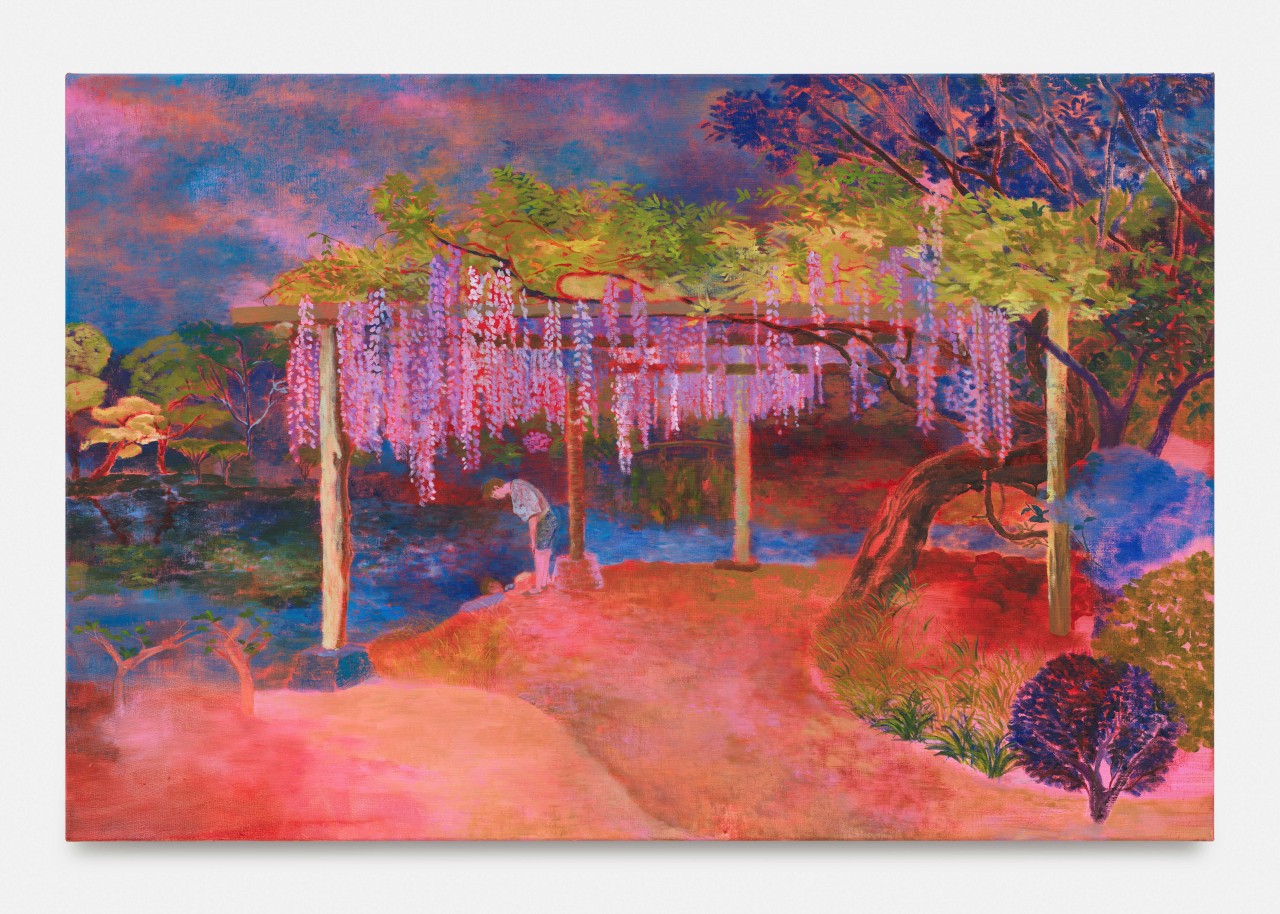
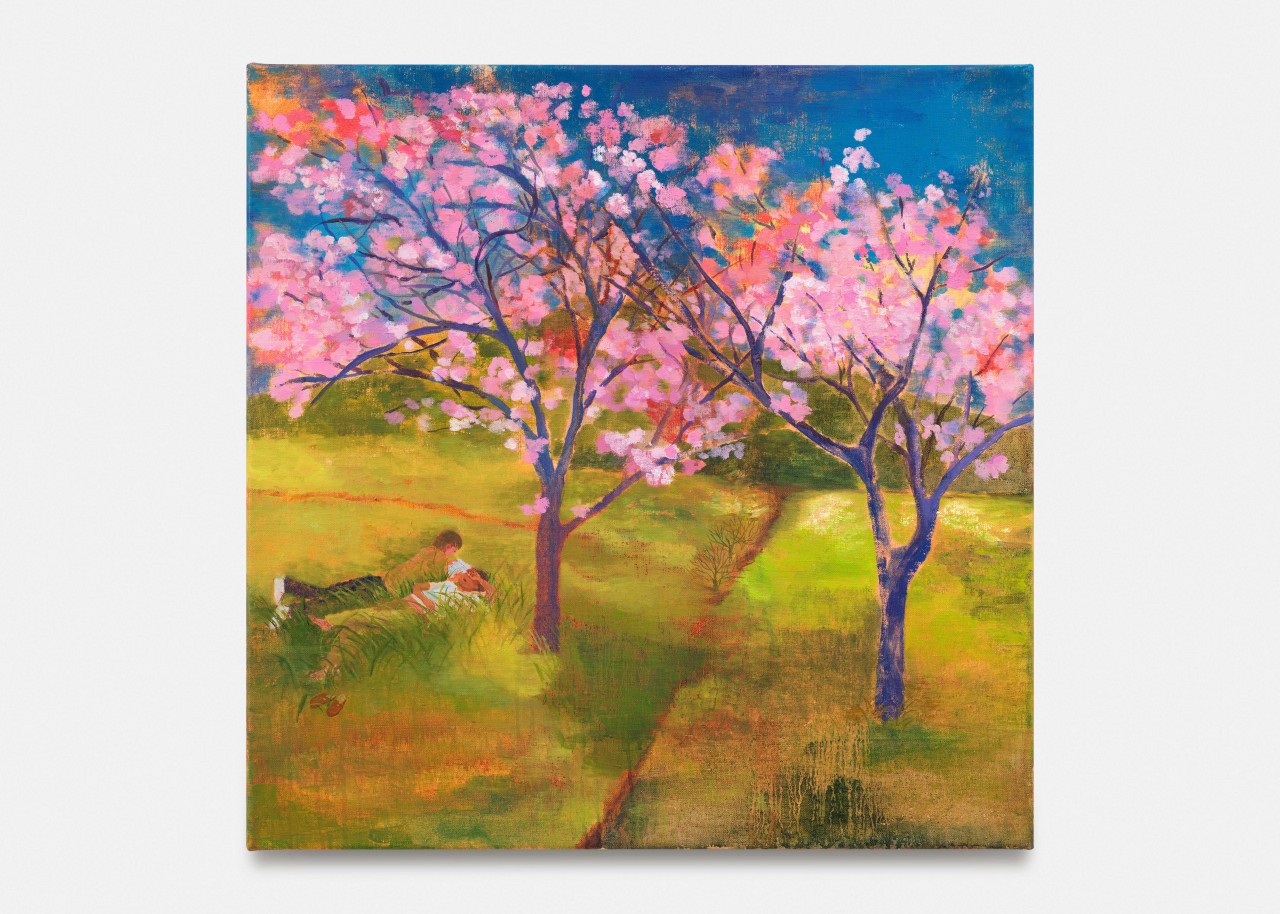
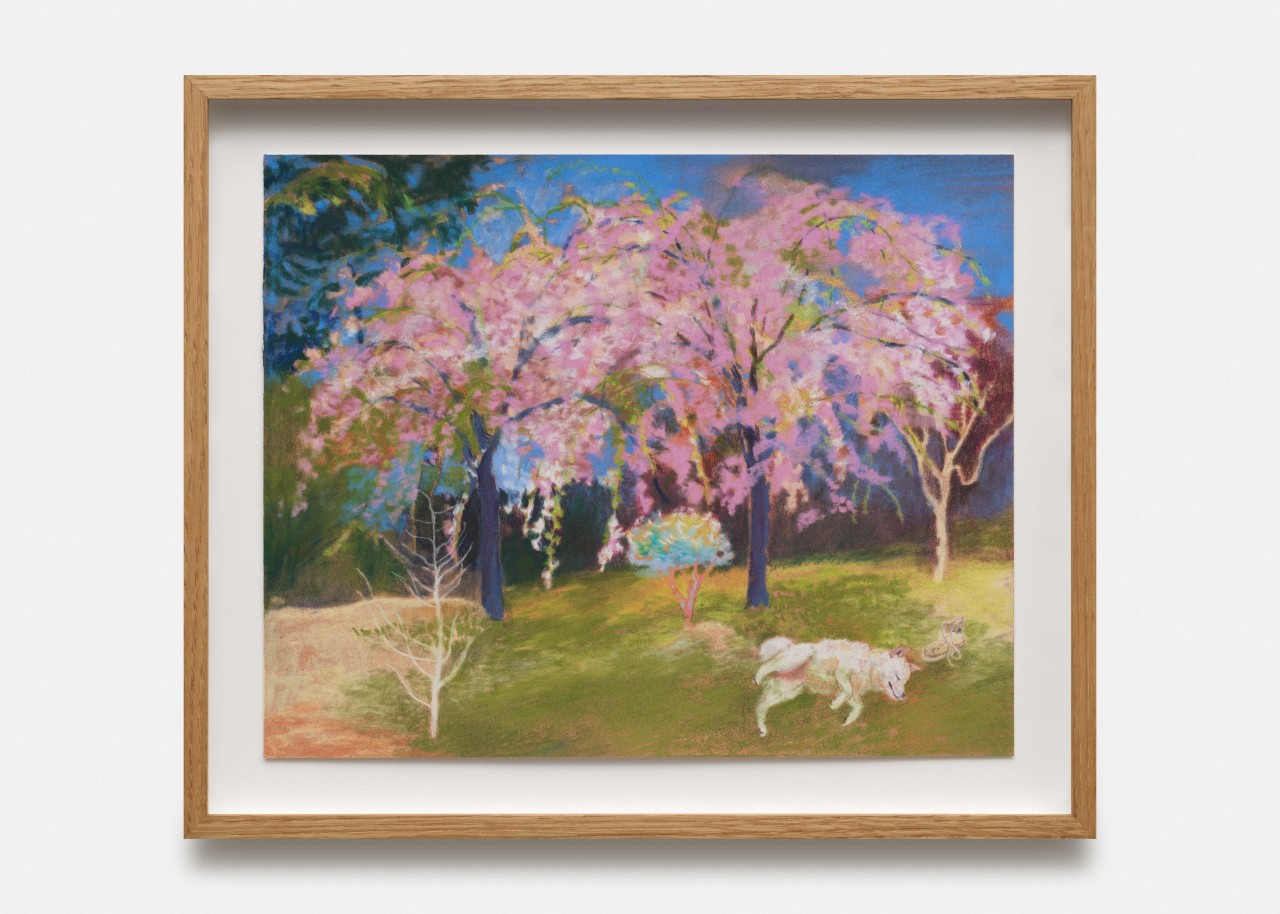
Kobayashi often paints from and around her family’s surroundings in Shizuoka, but these works are not landscape paintings in any traditional sense. They are layered compositions in which time folds and stretches, where personal memory blurs into theatrical convention, where contemporary countryside hosts figures from centuries-old plays. In Narcissus under the wisteria, Kobayashi draws from Caravaggio’s Narcissus but reimagines the scene beneath a Fuji wisteria tree in a park near her mother’s home. The wisteria, celebrated in classical Japanese texts like The Pillow Book and The Tale of Genji, symbolises longevity and enduring affection and shares its name with Genji’s first love in Murasaki Shikibu’s tale. The figure of Narcissus, in this context, becomes less a cautionary tale than a quiet reflection on longing, solitude, and the impossibility of reciprocated love.
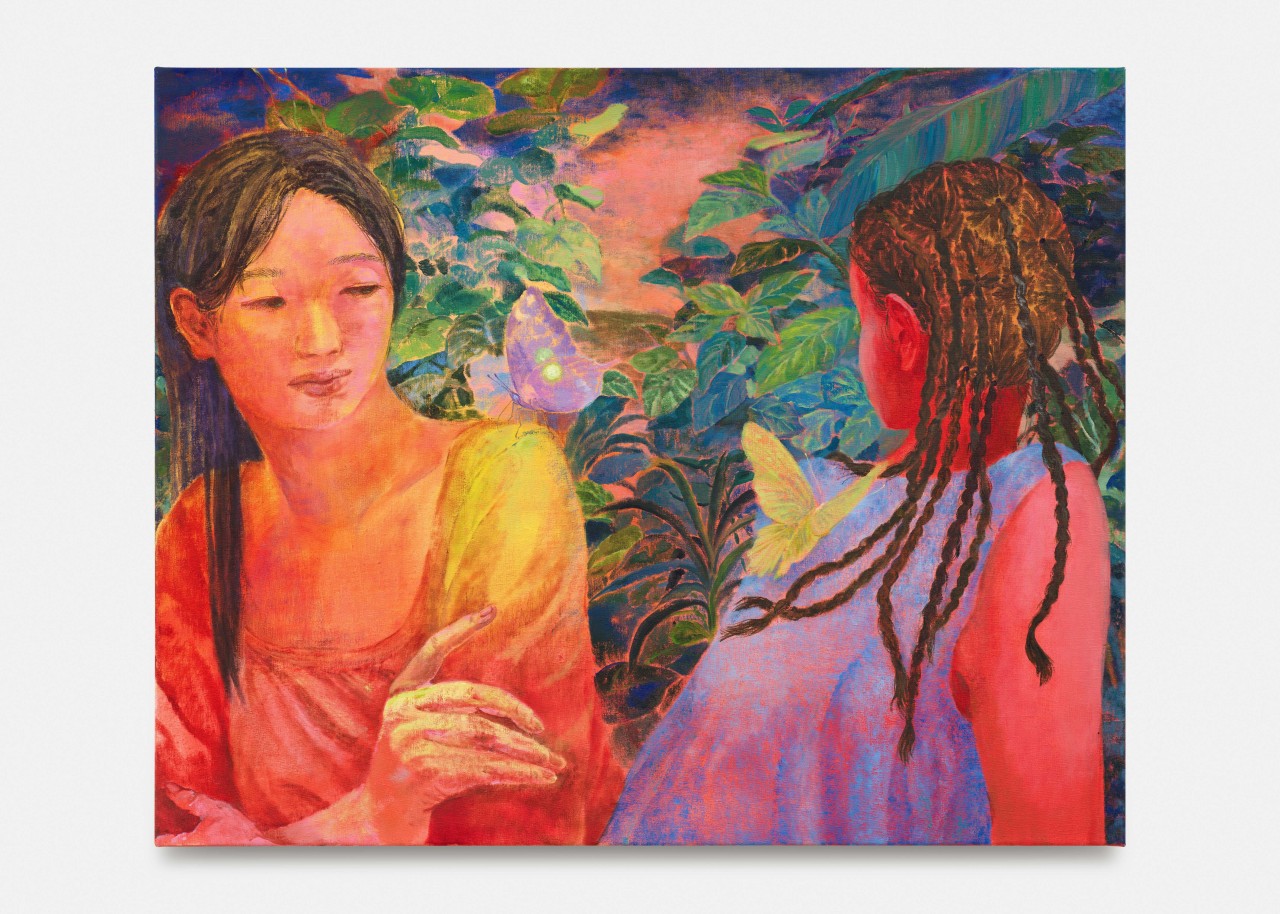
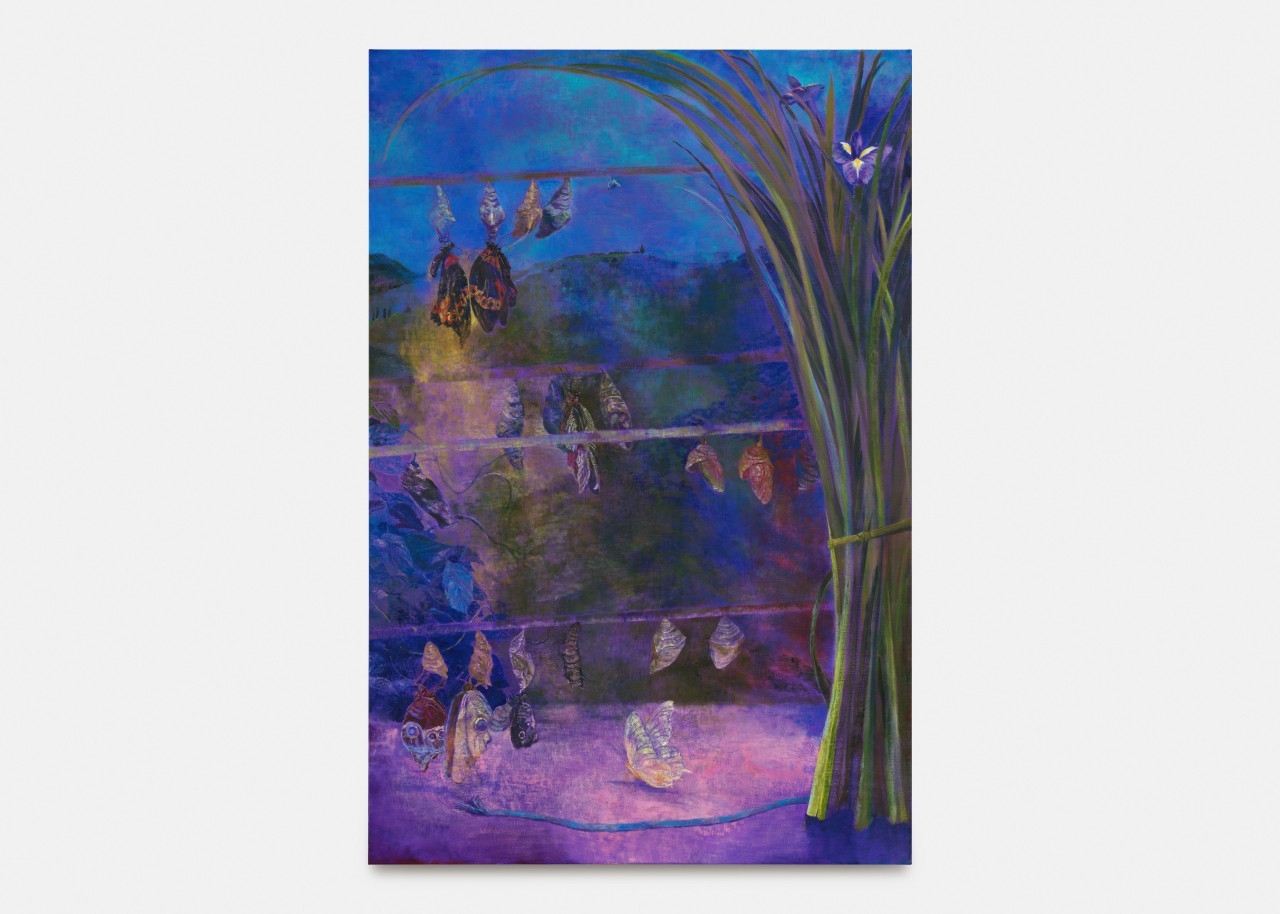
The nocturnal quality established through Noh’s theatrical vocabulary extends to moments of transformation. Puparium presents transformation as suspension, butterfly wings fluttering between states, front and back. Rather than staging a didactic metamorphosis, the painting captures the chrysalis as an enclosed space of vulnerability and latent vitality, the precise moment when change is happening but not yet visible. This sense of suspended transformation extends to Two girls and two butterflies, a double portrait of Kobayashi and her fourteen-year-old niece with butterflies resting on their shoulders.
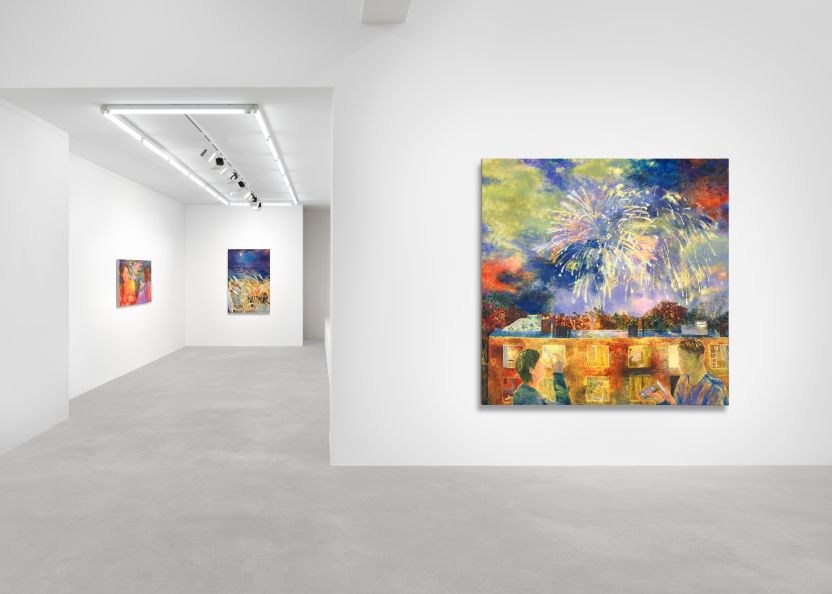
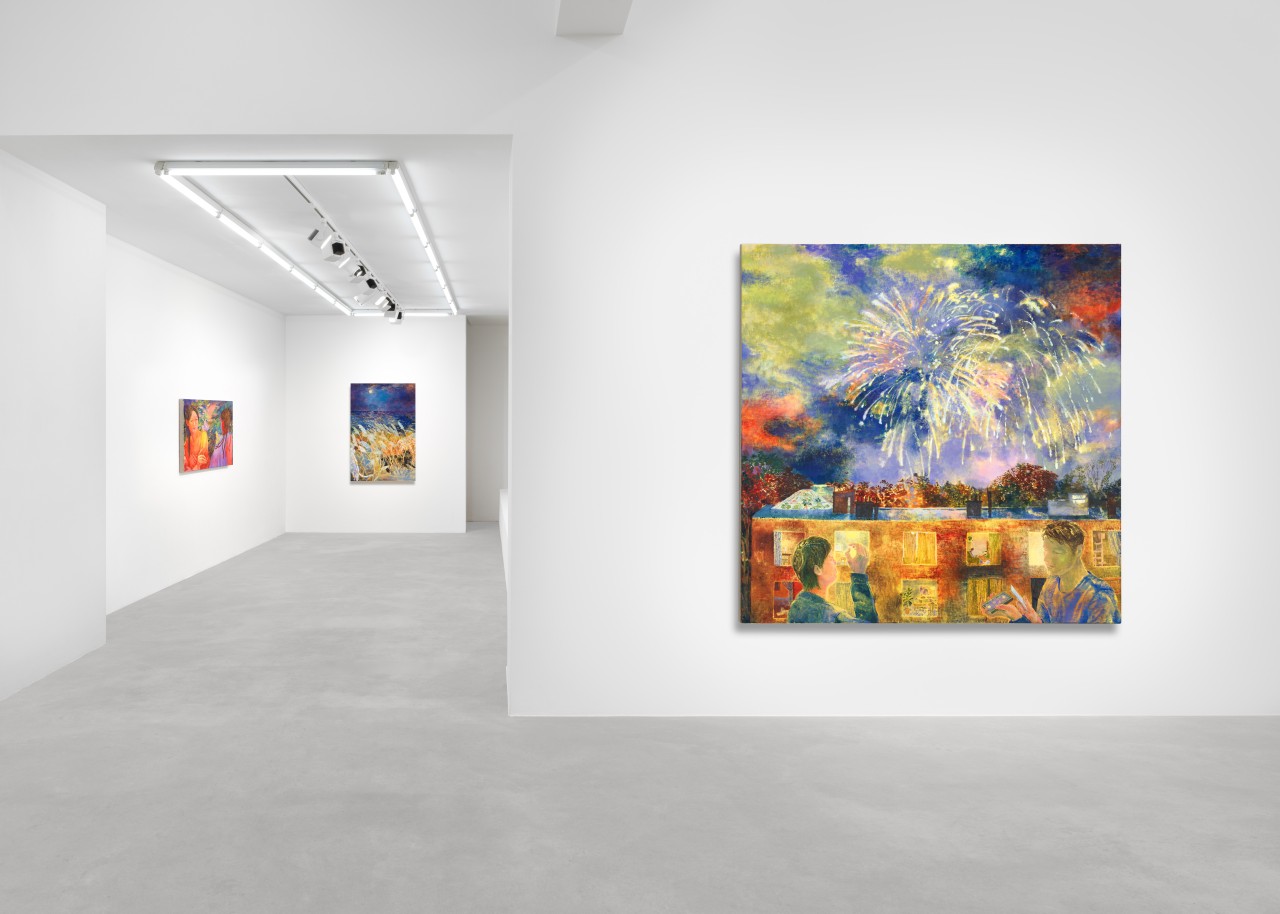
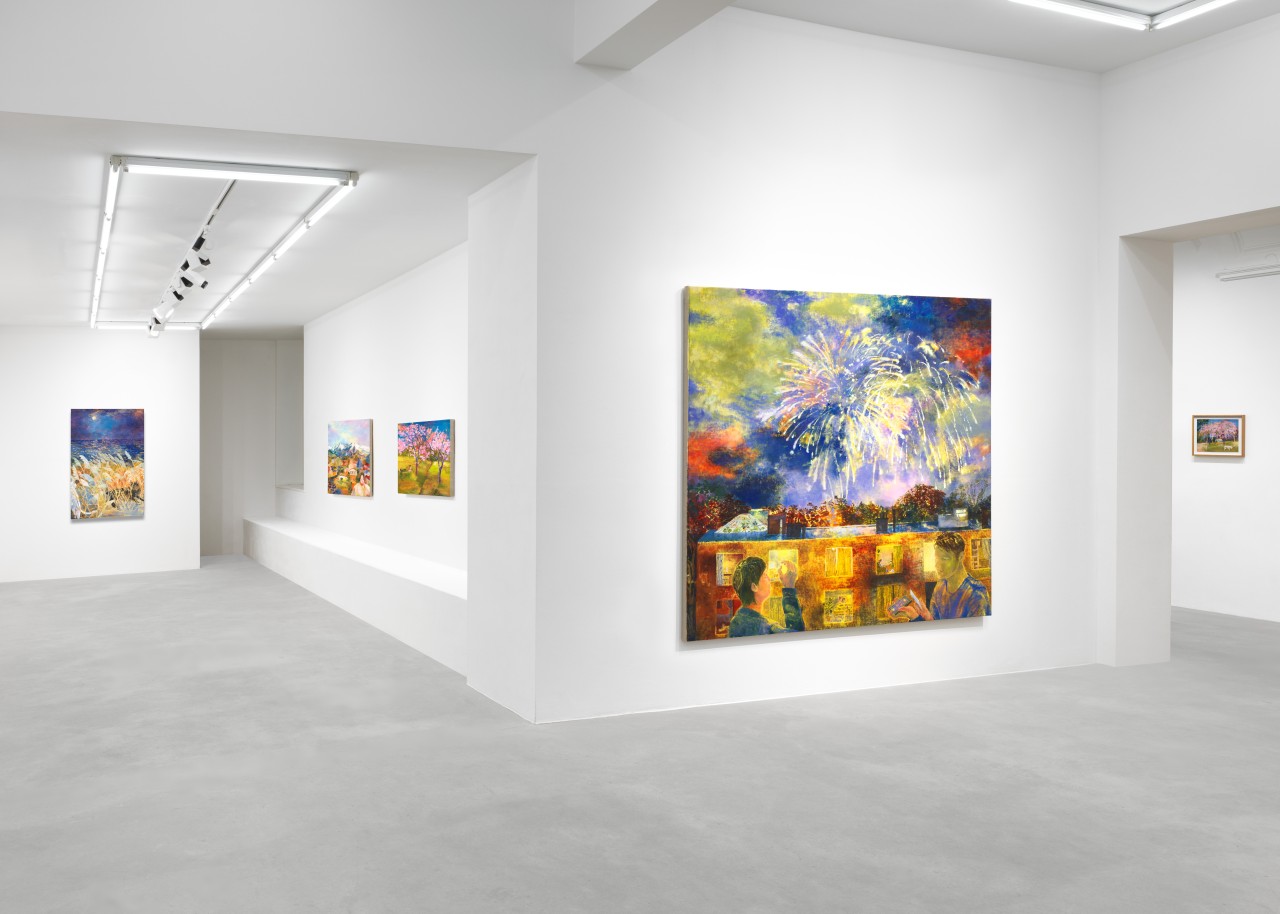
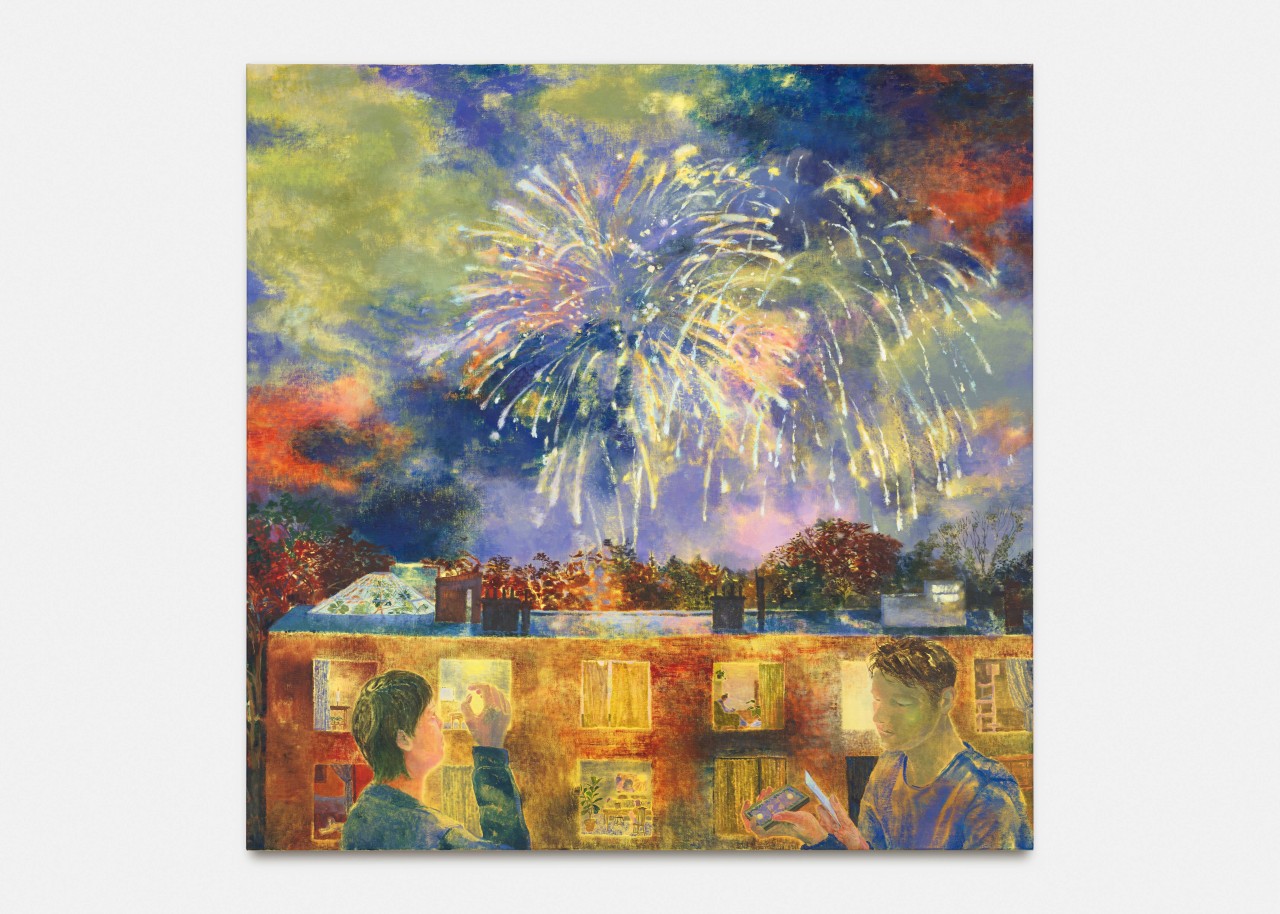
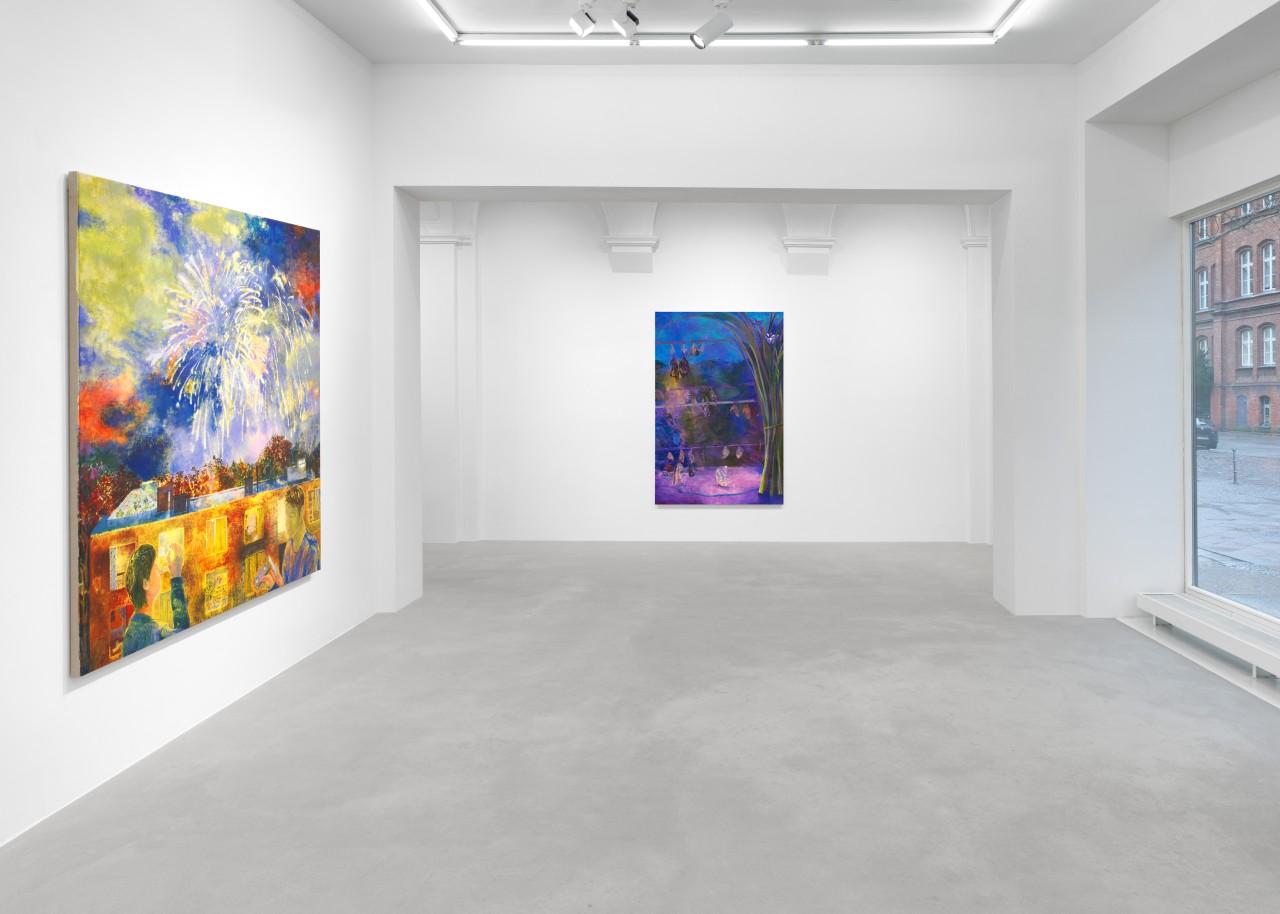
Two fireworks, a ladybird above a tarot reading depicts an interior moment of pause and symbolic density. Fireworks glow in the background, while a ladybird, known in Japan as Tentōmushi, or ‘Sun-path insect,’ flies upward toward the light. In Japan, summer fireworks are traditionally set off during Obon to guide ancestral spirits back to the sky. Here, residents rest quietly in illuminated rooms while fireworks bloom outside, the tarot cards scattered nearby offering another form of navigation through darkness. Meanings accumulate in fragments of ritual, light, memory, and intuition.
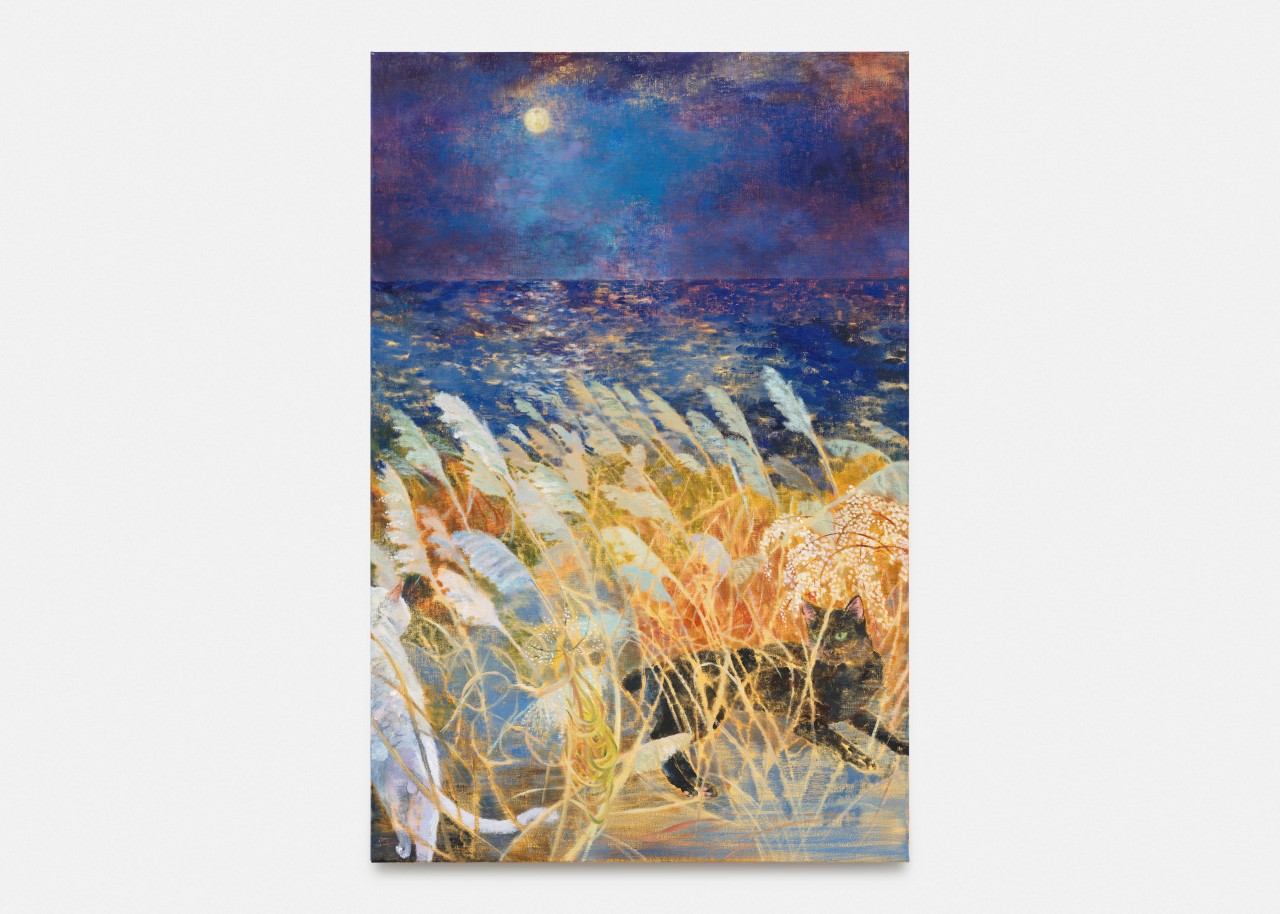
Kobayashi’s work is attentive to specific sites, customs, and histories without fixing them as static symbols, instead operating through mood and attunement as a form of atmospheric storytelling. The results are neither surreal nor realist but rather composed from emotional thresholds, moments before waking or just after memory returns. Half Waking offers not a single narrative but a field of impressions, small portals into a world where gestures, figures, and phenomena carry meanings that feel at once distant and familiar.