Aleksandra Domanović
5 September 2024 – 25 January 2025, Kunsthalle Wien
The exhibition shows the development of a practice shaped by information culture and mass media in a post-internet era. It begins with the website ‘http://hottesttocoldest.com’, produced in 2008. Programmed to re-order capital cities of the world in descending order according to their current temperature, it exemplifies Domanović’s playful yet critical engagement with geopolitics.
Other works look specifically to the Western Balkans. A new version of the video essay ‘Turbo Sculpture’ updates Domanović’s online research (begun in 2009) into the 21st century phenomenon of monumentalising popular celebrities across the region. Another video, ‘19:30’, completed in 2011, compiles video graphics and music from television news broadcasts between 1958 and 2010 (some of which were subsequently appropriated in techno music). The 2013 film ‘From yu to me’ tells the story of the introduction and removal of the ‘.yu’ internet domain for Yugoslavia, charting the arrival of the internet during the collapse of socialism in Eastern Europe.
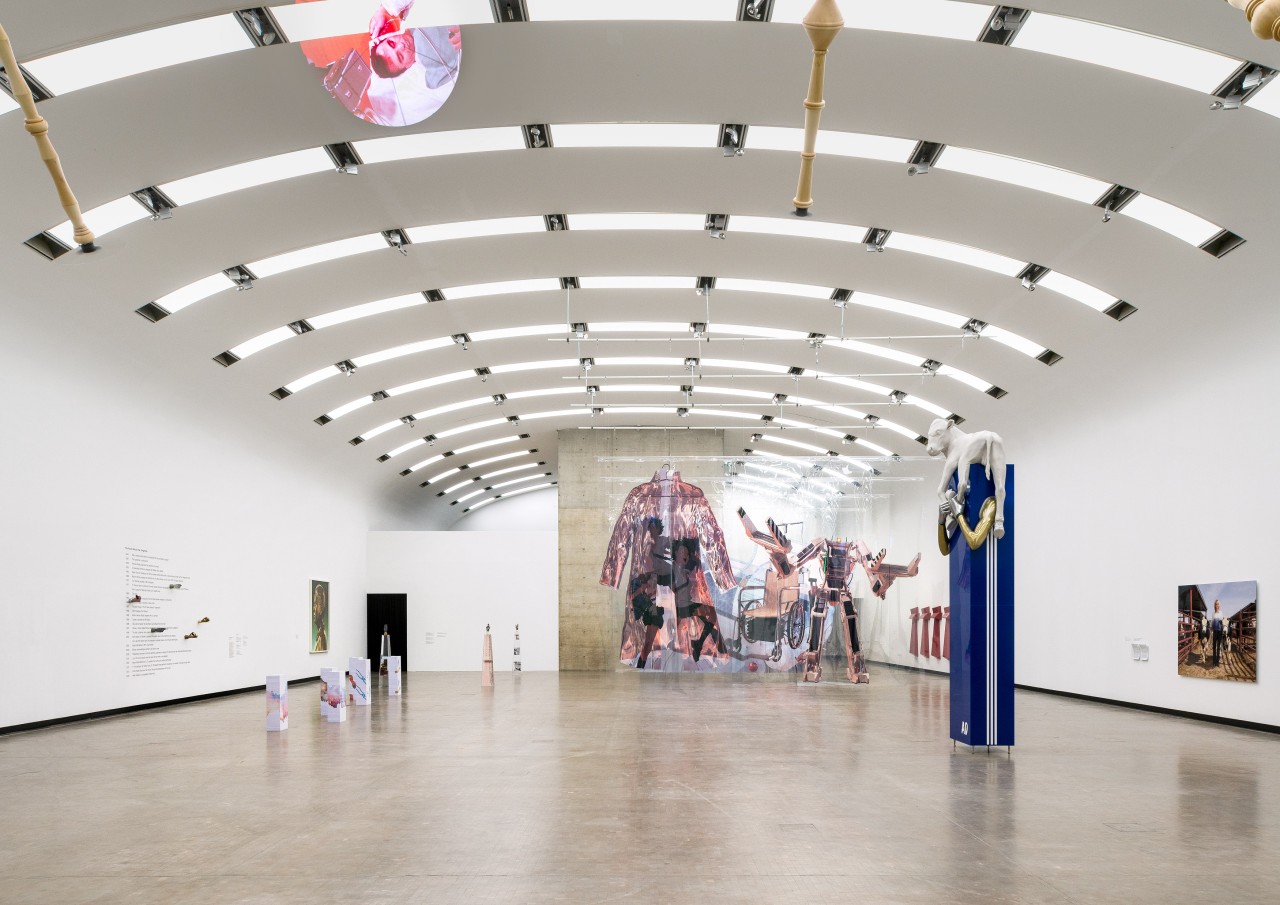
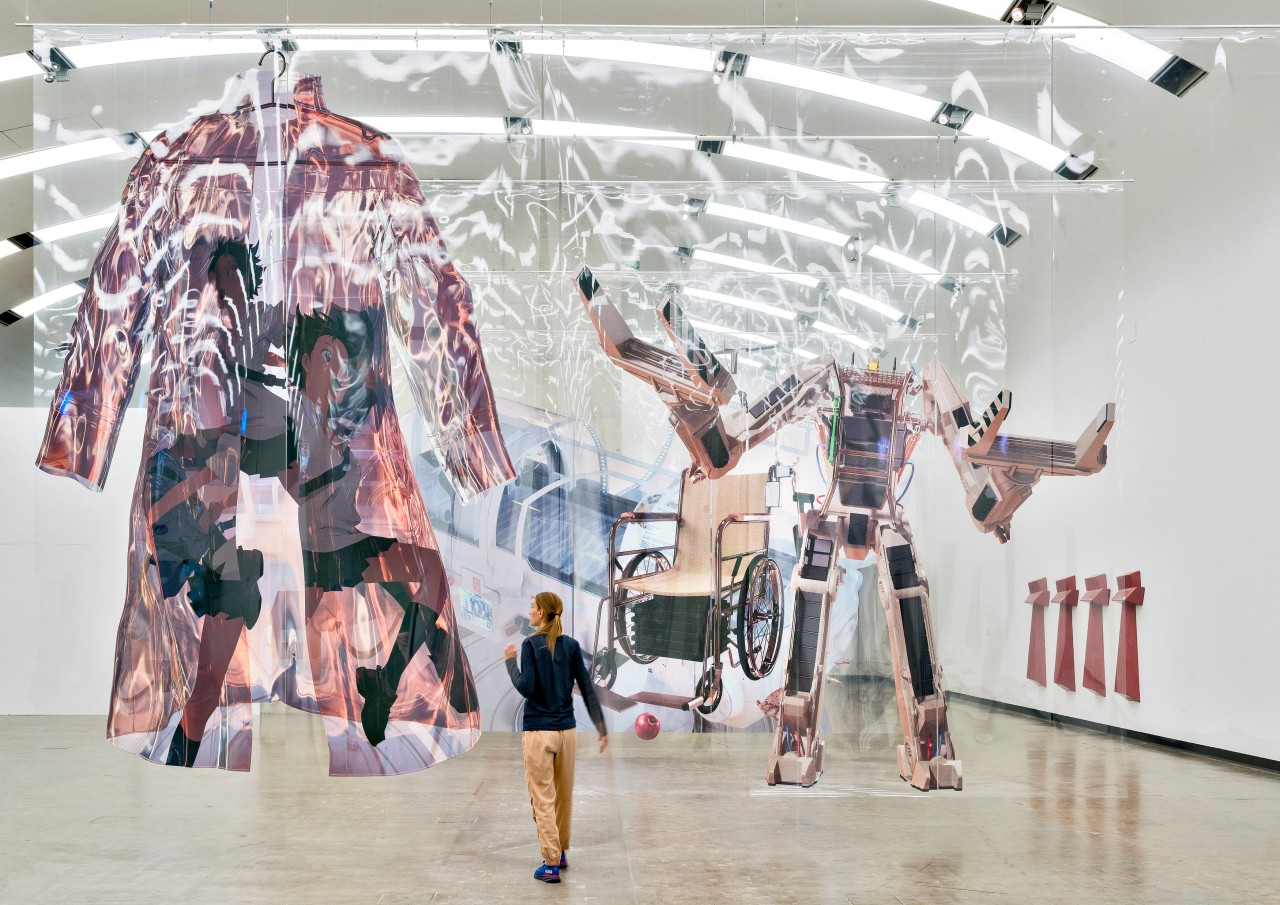
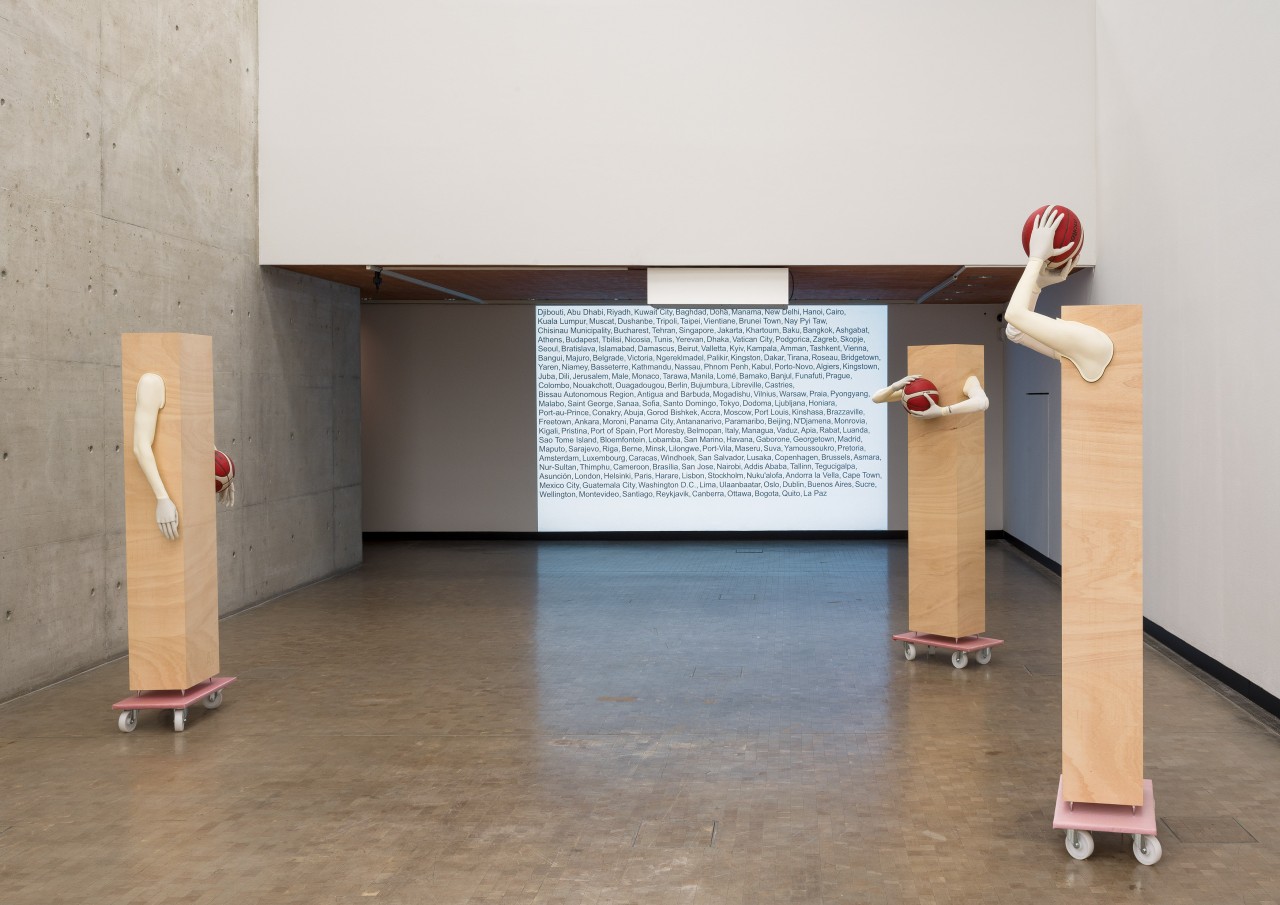
A number of works draw directly on the history of science and technology or the cinematic genre of science fiction to address questions of gender and identity. A large-scale installation from 2014 entitled ‘Things to Come’ considers the representation of women in popular science fiction. Elsewhere, figurative motifs such as a portrait of President Josip Broz Tito or a robotic hand designed by scientist Rajko Tomović are recast within sculpture and prints that imagine futuristic, post-gendered, post-human bodies. These include a series of monolithic sculptures made in the tradition of Korai, a genre of ancient Greek sculpture depicting female figures bearing offerings. Domanović’s ‘Votives’ (2016–2018) present a broad array of objects including basketballs and a sculptural representation of a genetically modified calf.
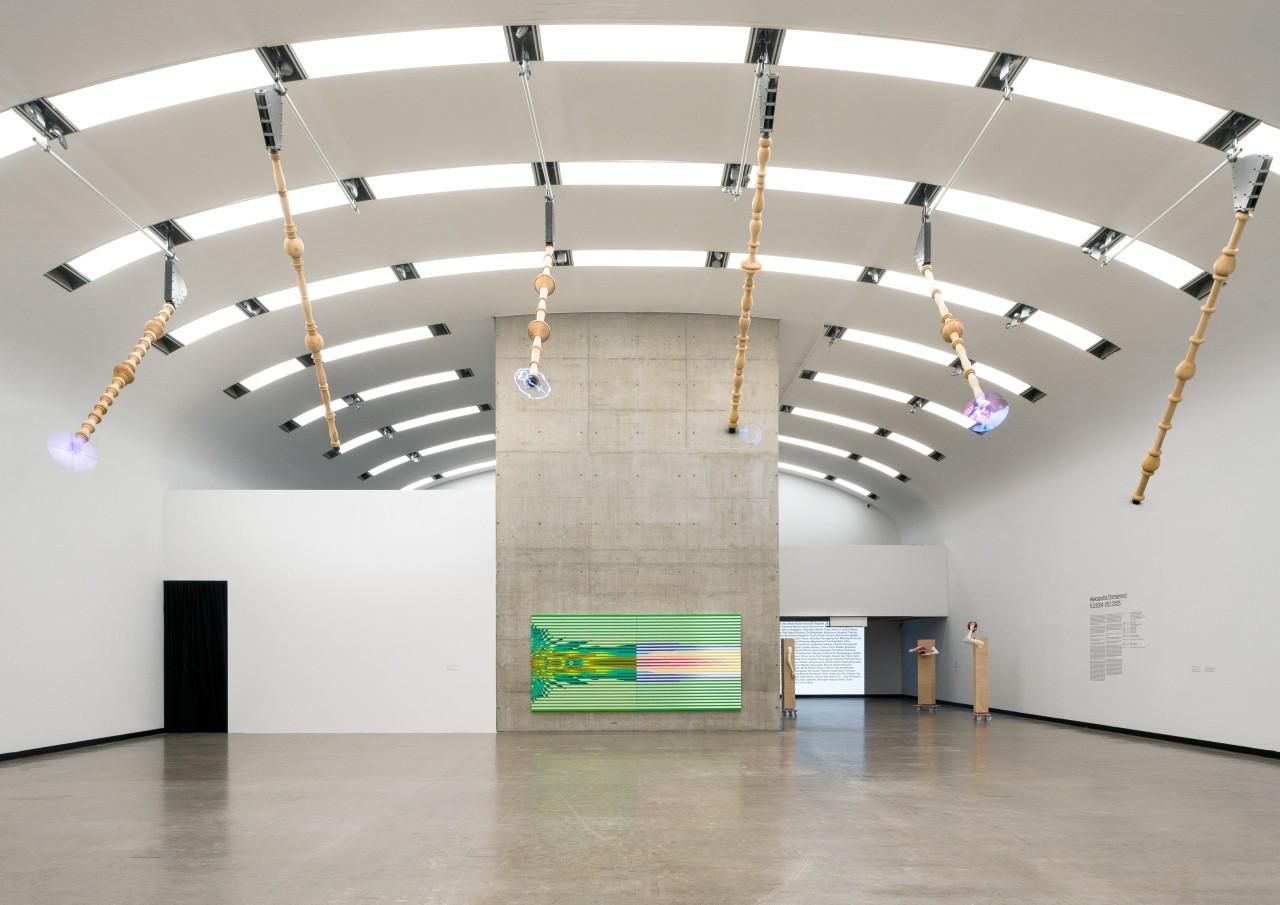
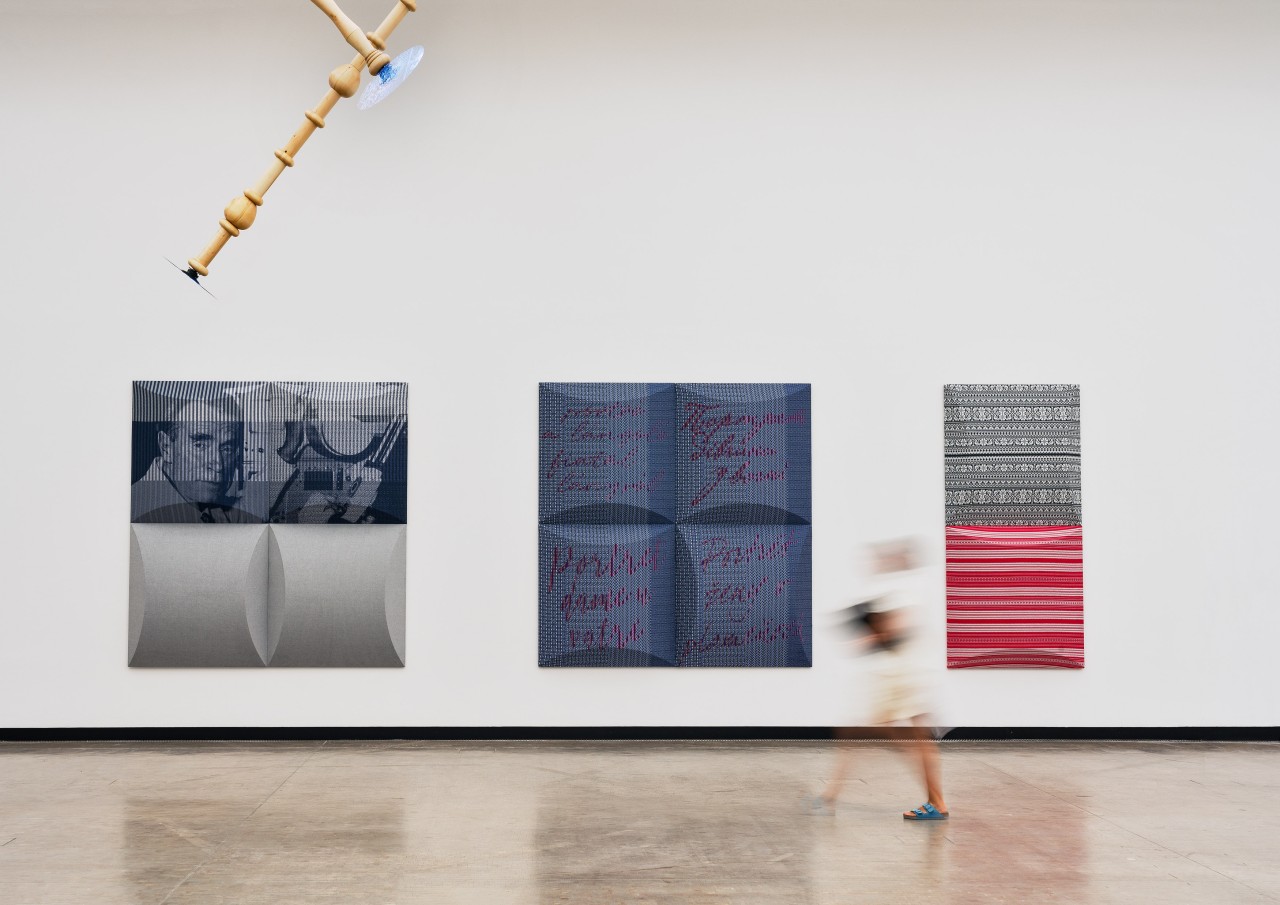
The exhibition includes a series of new and more recent works that consider the roles that science and technology play in representation and perception. ‘Becoming Another (Beam)’* (2021) and ‘If These Walls Could Talk’ (2024) are large-scale works employing the optical illusion named after the meteorologist Wilhelm von Bezold. These multi-layered works quote the history of medical imaging, making particular reference to obstetric ultrasound technology and the role that it plays in gender identification, women’s rights and the debate around abortion. In another series, ‘Worldometers’ (2021), LED fans display historical photographs of doctors, patients, ultrasound machines and foetuses, alongside corporate logos and footage from ‘gender reveal’ announcements. ‘If These Walls Could Talk’ has been commissioned especially for this exhibition. It connects earlier research with questions of national identity and culture incorporating a diverse array of images including a 1960s portrait of the physician Ian Donald (who pioneered the use of ultrasound in obstetrics) and Slovakian folk patterns.